
- Services:
- Army, Air Force, Navy
Aboriginal and Torres Strait Islander readers are advised that the following content contains images and names of people who have died.
Twenty years on, the Victorian Aboriginal Remembrance Service stands as a powerful symbol of reconciliation, paying tribute to the vital contributions Aboriginal and Torres Strait Islander service personnel have made and continue to make to the Australian Defence Force.
The History of the Victorian Aboriginal Remembrance Service (VARS)
The Victorian Aboriginal Remembrance Service (VARS) is held annually on 31 May and provides Victorians the opportunity to come together during Reconciliation Week and reflect on the sacrifices of Aboriginal and Torres Strait Islander servicemen and women who have served, and currently serve, in the nation’s armed forces. In 2026, the service celebrates its 20th anniversary.
The VARS traces its beginnings to Healesville in the idyllic Yarra Valley, the town I have called home for the last forty years. The location is significant, given the town’s close proximity to the former Coranderrk Aboriginal Station—a 2350-acre mission established in 1863 for Aboriginal people from across Victoria, which closed in 1924 after most of the land was sold or leased and the residents moved to Lake Tyers in Gippsland. What remained of Coranderrk was finally revoked in 1948 and divided up for soldier settlement, however Aboriginal soldiers were not eligible for the land.
The VARS began in 2006 when I was president of Healesville RSL Sub-Branch. Yarra Yarra Elder the late Aunty Dot Peters AM approached me to ask if the RSL would honour her father and other Indigenous soldiers who fought and died in the defence of Australia, but had received little or no recognition.
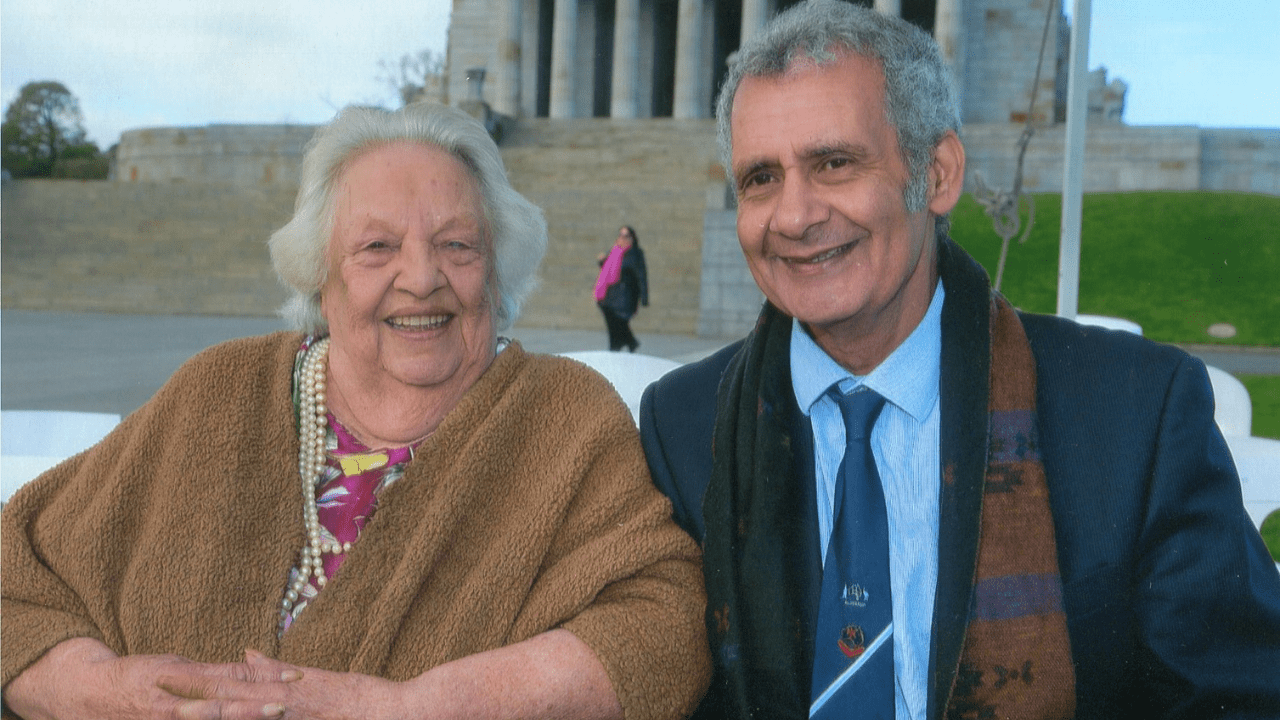
Since the Boer War (1899–1902), thousands of Indigenous Australians have served in the nation’s armed forces with some Aboriginal participation also recorded in colonial military units before Federation. Around 1,200 Indigenous soldiers served in the First World War, and an estimated 6,000 to 7,000 in the Second World War. Indigenous men and women have continued to serve in conflicts and peacekeeping missions from the post-war period through to the present day.
This was in spite of restrictive enlistment policies that lasted up to the second half of the twentieth century, as well as continuing social discrimination upon their return when very few received their full entitlements, including soldier settlements. Aunty Dot had tried for many years to get recognition through the RSL and other government organisations, but her attempts had been unsuccessful.
I recognised that a formal acknowledgement needed to take place. I have always believed that if you fight for your country, it owes you acknowledgement, equality and recognition. As a result, the reconciliation to honour the Indigenous soldiers began, and the first remembrance service was held.
The service was not without its detractors, but with the support of the Healesville RSL Sub-Branch committee we forged on, and I raised the Aboriginal flag for the very first time at the RSL. During Reconciliation Week, the Sub-Branch introduced a change to the daily playing of The Ode, accompanying it with the sound of the didgeridoo. Following the service at Healesville RSL, Aunty Dot and I held consultations with the Shrine of Remembrance and government organisations with a view to establishing a permanent remembrance service at the Shrine.
On 31 May 2006, the Shrine held a remembrance service to honour Victoria’s Indigenous servicemen and women and raised the Aboriginal flag for the first time in its history. This has become the service we know and recognise today—an important event within Victoria’s annual commemorative program and a cornerstone to Victoria’s Reconciliation Week efforts. The Shrine has hosted the VARS every year since its inception (including a ten-person commemoration which took place in 2020 at the height of the COVID pandemic).
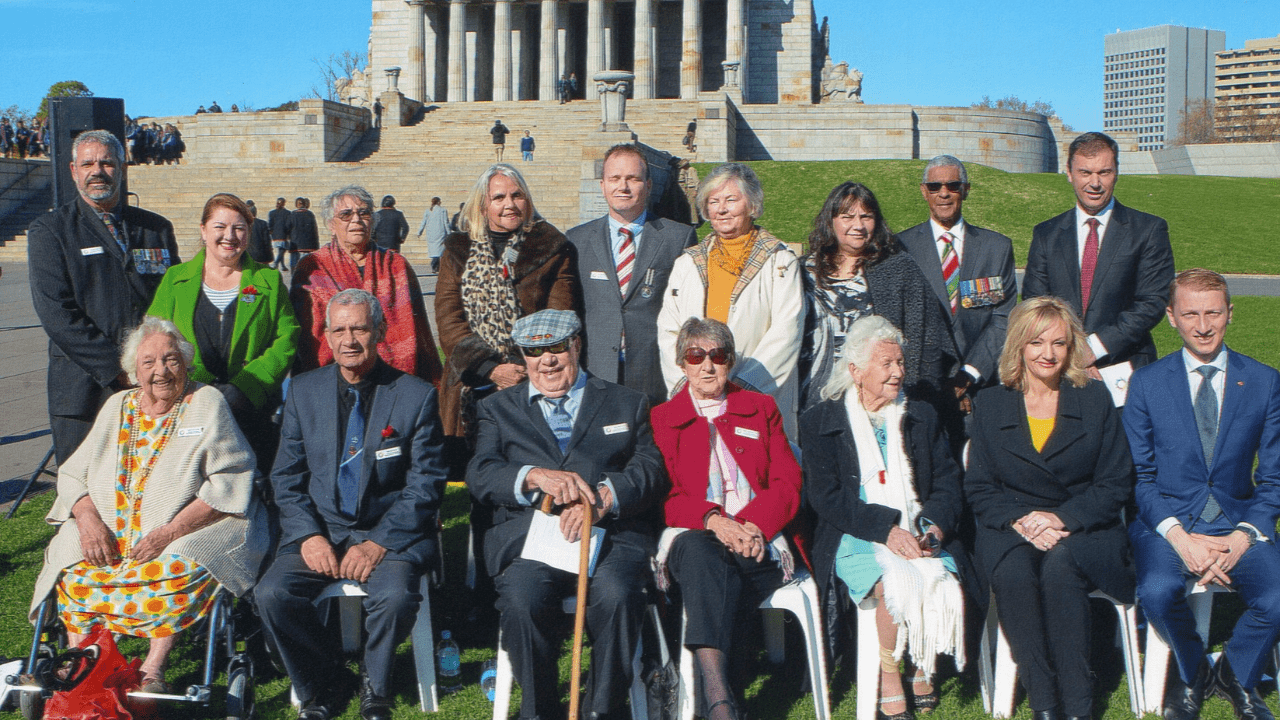
The Victorian Aboriginal Remembrance Committee (VARC) was established to work with the Victorian government and other organisations to deliver the service. In addition to being a Co-Founder of the VARS, I have also served as the Vice-Chair of the VARC for the last nineteen years.
The evolution of the VARS
In its early years, the VARS was smaller and had a slightly different focus. While reconciliation was always at its heart, the Service initially provided a space for Indigenous Victorians to honour the service of their loved ones. Today, it invites the wider community to come together in a shared act of remembrance and reconciliation, acknowledging the contributions of First Nations servicemen and women.
Over the years, the VARS has grown in size and stature and is attended by the Governor of Victoria (or their lieutenant), government ministers and other dignitaries, as well as senior officers from within the Australian Defence Force. In recent times, there has been representation from the federal government—an indication of how highly regarded the event has become.
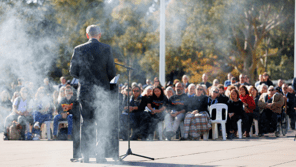
At its heart, however, the VARS remains a community event. What makes the Service unique is the way it blends the formal elements of a traditional commemorative service with celebrations of Indigenous culture, such as songs and music. A didgeridoo accompanying the Royal Australian Air Force Band in the National Anthem has become a familiar sound, but would have been unheard of twenty years ago. Such changes have taken time as protocols are finally being peeled back. Each year, The Ode is recited in both English and Indigenous language (Taungurung), and begins with a Welcome To Country and Smoking Ceremony where guests are invited to smoke themselves.
More recently, the program has included a flypast. Great views were had this year of a Pilatus PC-21 aircraft from the Roulettes Aerobatic team based at RAAF East Sale, which appeared to almost clip the tiled roof of the Shrine as it flew past, sending tingles down collective spines.
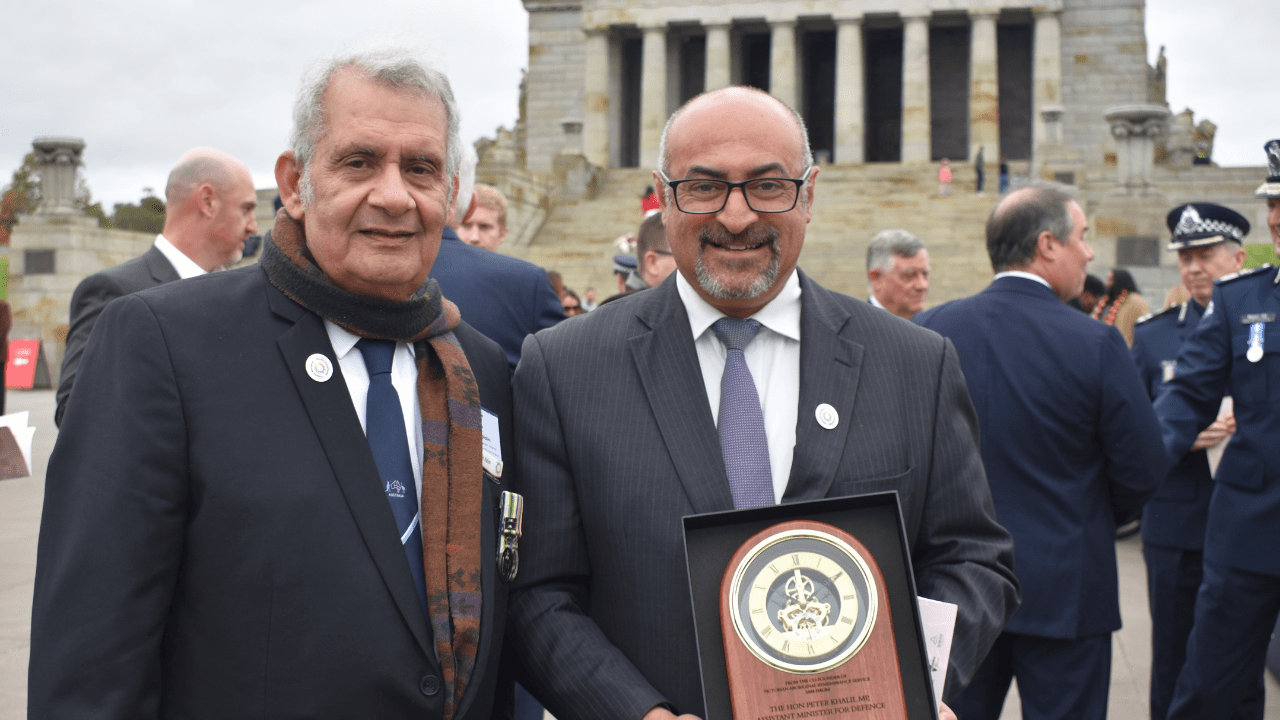
In 2021, the VARC was recognised with the prestigious Helping Achieve Reconciliation Together (HART) Award in the Champions of Reconciliation category. Presented by Reconciliation Victoria and the Victorian Local Governance Association (VLGA), the award celebrates sustained and meaningful contributions to reconciliation.
Looking to the future
Despite VARS’ growing appeal, the VARC acknowledges that there is still work to be done. One of our top priorities is the need to increase Indigenous representation at future services. It is hoped that for the 20th anniversary service in 2026, as many invitations as possible can be made to Victorian Aboriginal communities to attend and lay a wreath on behalf of their Indigenous veterans, many of whom still remain unidentified. Victoria has no official public record of Aboriginal soldiers who have served from the state, as ethnicity was not historically recorded. This means the true number of Aboriginal service people may never be known. Despite this challenge, the VARC recognises the importance of such a register and is working to develop a framework to establish one, aiming to launch it as part of the 20th anniversary celebrations in 2026.
I believe that for the VARS to continue growing, it must remain relevant, and we must embrace new and bolder initiatives that build on past efforts. Thanks to the committee’s advocacy, meaningful changes have already taken place, including the dedication of a tree on the Shrine Reserve with a plaque honouring Indigenous servicemen and women, and amendments to the Victorian school curriculum to include Indigenous military history. These are just some of the positive flow-on effects from the service.
I will personally continue to advocate for a permanent memorial to First Nations servicemen and women from Victoria, a long-held aspiration of many Indigenous Victorians that has so far remained elusive despite the existence of permanent memorials in other states such as New South Wales and South Australia.
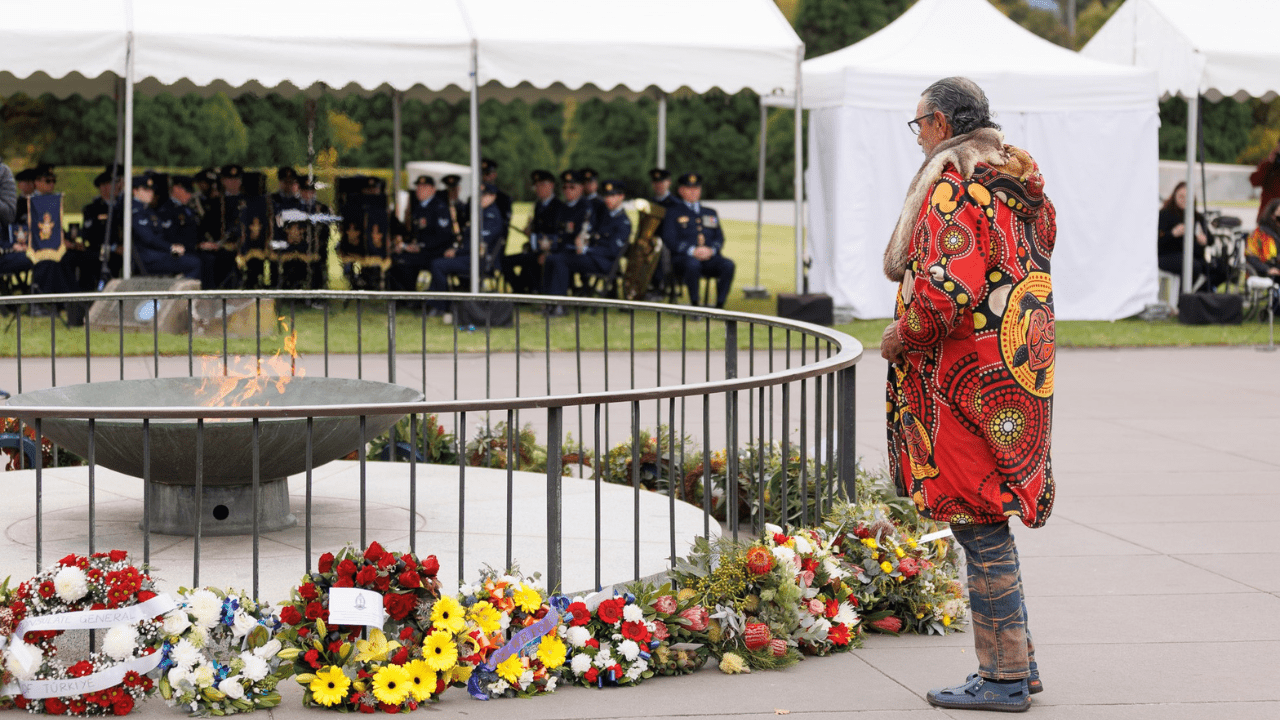
As the flag-bearers of the future, our young people will play a crucial role in driving the whole reconciliation process forward. I am working to this end to increase the number of schools represented at future Services so that young people understand more about the sacrifices of Aboriginal and Torres Strait Islander servicemen and women.
In June, I attended a small remembrance service at Badger Creek Primary School (which coincidentally sits in the vicinity of the old Coranderrk Aboriginal Station). To my knowledge, this service was the first of its kind anywhere. While the school typically sends a group of students to the Shrine for the VARS each year, they chose not to attend in 2025 due to concerns following disruptions to the Welcome to Country on Anzac Day. Instead, they chose to honour the occasion by holding their own ceremony during a school assembly, and I was invited to speak about the remembrance service I initiated twenty years ago at Healesville RSL.
The impressions I took away from the school that day have filled me with a deep sense of optimism for the future, that the Aboriginal soldiers will never be forgotten again. I cannot help but feel in many ways the journey I began in 2006 has come full circle, and that with the small service at the school, history has been made for a second time in Healesville.
The Victorian Aboriginal Remembrance Service is held on 31 May each year and is supported by the Victorian Aboriginal Remembrance Committee and First Peoples State Relations. The VARC thanks the Shrine of Remembrance for their support of the service.
Author:
After a two-decade career in the Royal Australian Air Force, Sam Halim co-founded the Victorian Aboriginal Remembrance Service. Sam has been awarded the Australian Service Medal for Iraq and Kuwait, and the Defence Long Service Medal, First Clasp. Sam is a former President of Healesville RSL Sub-Branch and Healesville Rotary Club.
Enjoyed this article? You might be interested in:
- Victorian Aboriginal Remembrance Service, held annually on 31 May.
- For Kin and Country.
This special exhibition explores the extraordinary history of First Peoples’ service in the Australian Defence Force and can be viewed online. - 20 years of the Victorian Aboriginal Remembrance Service – A family reflection
This article was written for the 2025 edition of Remembrance magazine by Dr. Andrew Peters.
Updated