
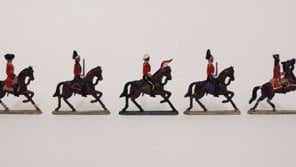
Figurines of soldiers, made in a variety of shapes, sizes and materials, have been enjoyed by children and adults alike for centuries. Lead-based miniature soldiers became particularly popular across Britain and her territories from the late 1800s. As a child, Winston Churchill was known to reenact scenes from real-life battles with his collection of 1,500 pieces that comprised of British and French forces. In 2025, the Shrine of Remembrance accepted a donation of 375 lead toy soldiers.
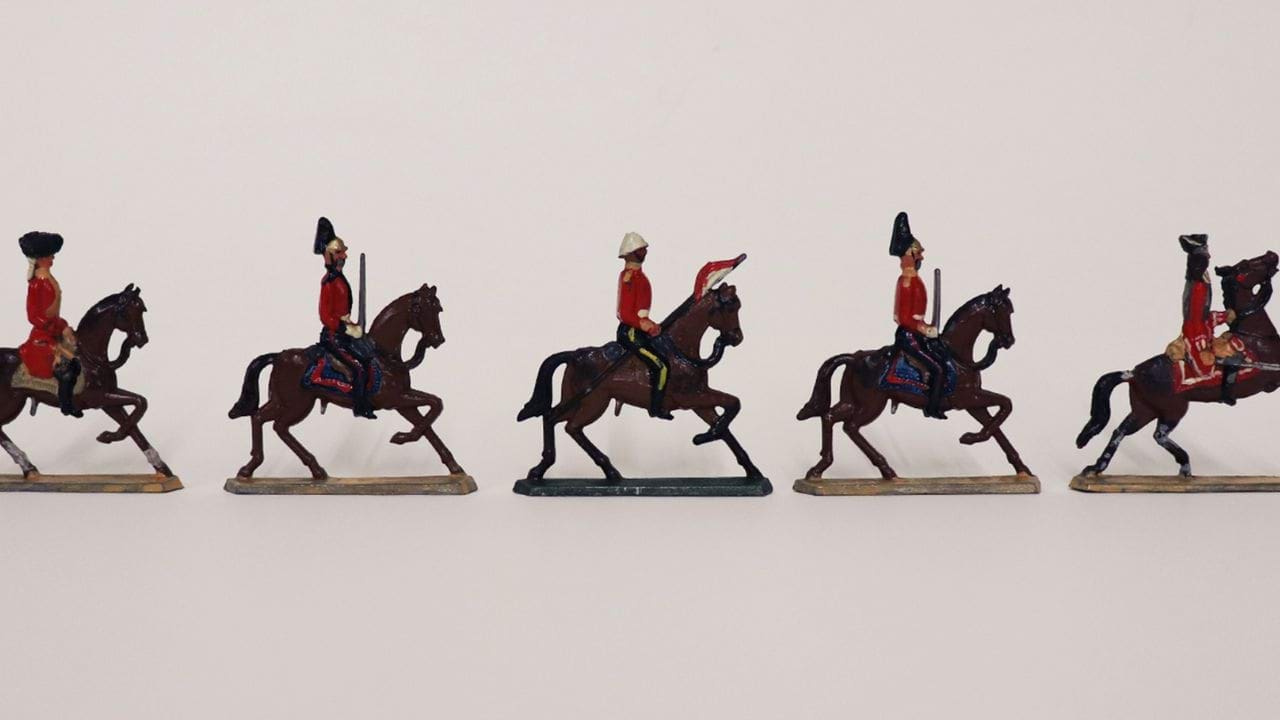
Cast lead figurines were mass-produced in France and Germany in the 19th century, with a key manufacturer being Heyde of Dresden. The relatively expensive figurines were solid metal and most often positioned in profile. In 1893, William Britain Jr of the Britains London firm introduced hollow casting as a new manufacturing technique. This process involved the removal of excess lead once the external case had dried. With this reduction in cost, the soldiers became an affordable toy that was widely available at department stores and other retail outlets. The United Kingdom soon quickly replaced Germany as the primary toy soldier manufacturer.
The figurines were standardised to a ratio of 1:32 and stood 54mm tall. Toy production mirrored current events by replicating the uniforms worn by real soldiers. They were most frequently sold in box sets, with new variations being released each year and popular sets kept in continual production. Lead toy soldier manufacturing ceased in 1966, following concerns regarding the health risks of lead and the widespread introduction of commercial plastic in the 1950s.
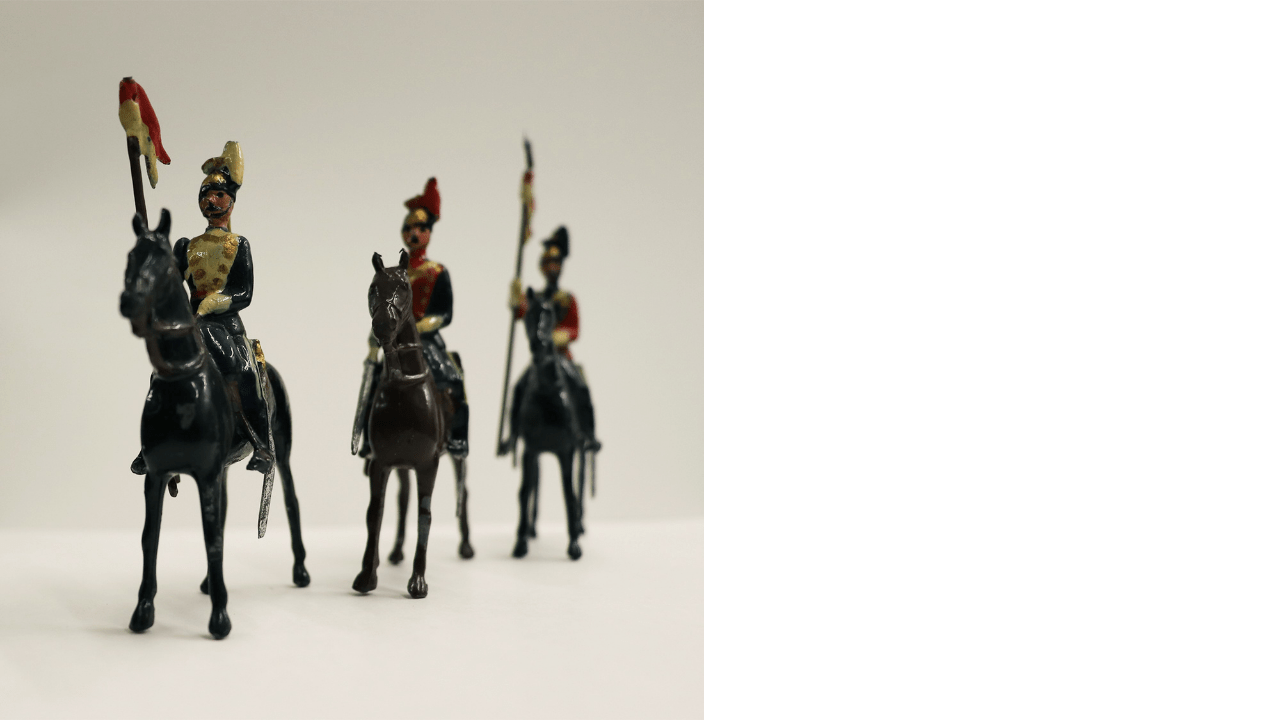
The Shrine’s new collection of toy soldiers was donated by Colonel Catherine (Bunny) Carrigan, board member of the Shrine since March 2020 and current Deputy Chair. Bunny, who has over 35 years of service in the Australian Army, inherited the collection from her father who also served in the military. Both Bunny and her father played with these toys as children.
Within this group of soldiers are examples of both the earlier solid-metal design as well as those made with the hollow casting technique. There is great representation of forces from within the British Empire, as well as allied and enemy armies. Most notably are soldiers of Australian, Austrian, French, Hungarian and German backgrounds. Each group is easily distinguishable by their intricate hand-painted, colourful uniforms, which also contribute to the unique nature of each soldier.
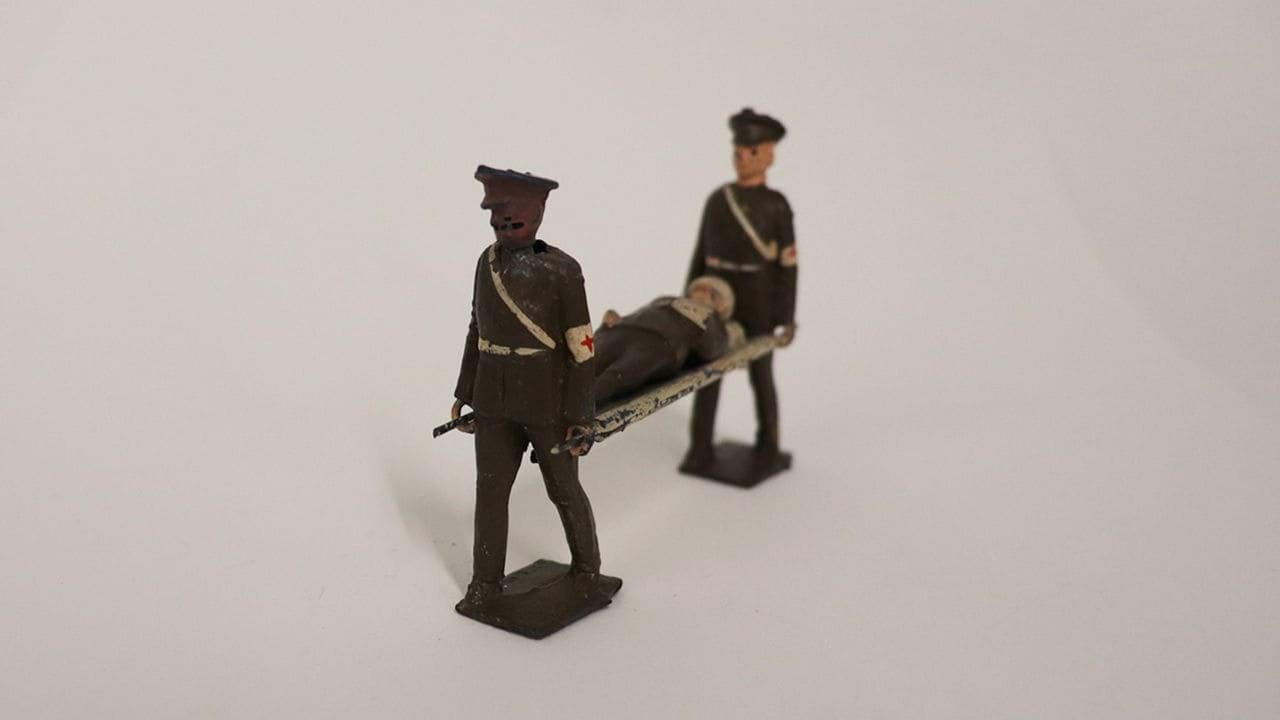
The figurines have been crafted in distinctive positions and with intriguing accessories. When placed in a line, groups of soldiers appear to march with their comrades, others stand proudly holding flags, guns or musical instruments, while mounted horsemen tower above the rest. Tiny arms and heads of some soldiers’ swivel into different positions, while others crouch in a fighting stance. The most poignant figurines are the two stretcher bearers carrying their injured mate.
This large grouping of toy soldier figurines are interesting examples of the methods in which concepts of warfare and service can be introduced to young children through play.
Author:
Selina Wilmott is the Exhibitions and Collections Officer at the Shrine of Remembrance.
Enjoyed this article? You might be interested in:
- Our other From the Collection article From Bush to Battalion: Blinky Bill goes to War
- Want to make a donation to the Shrine Collection? Start here
- Previous Shrine exhibition Toys, Tales and Tenacity
Updated